Mustard Sans App is a modern ai-powered application for detecting Mustard and Wheat plants.
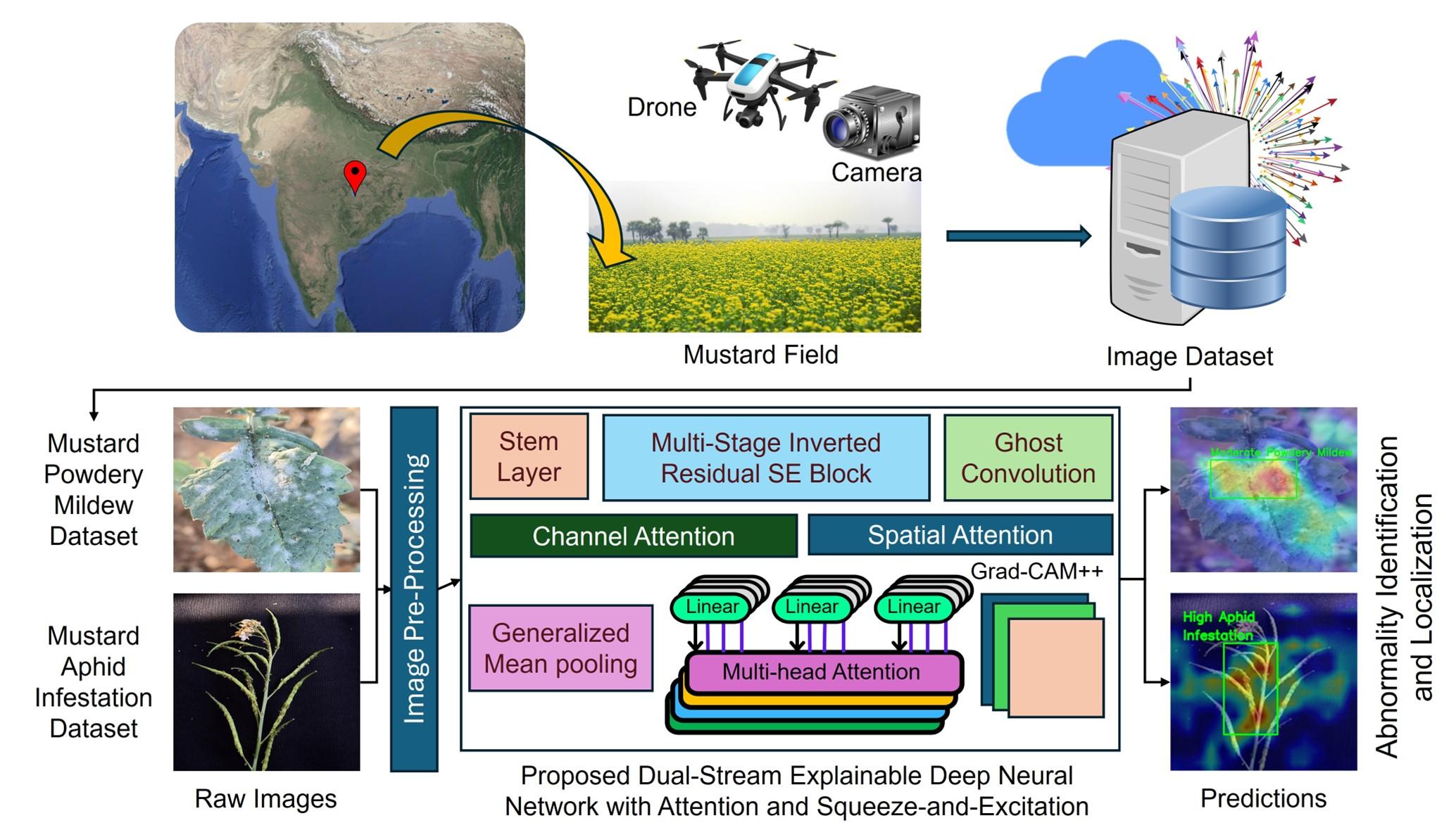
A prompt and precise evaluation of disease severity in mustard crops, specifically regarding powdery mildew and aphid infestations, is essential for efficient crop protection and precision agriculture. Nonetheless, real-world situations present considerable diversity in illumination, background intricacy, and symptom distribution, complicating precise severity classification. Consequently, resilient and comprehensible automated systems are essential for facilitating extensive agricultural monitoring and decision-making.
This research seeks to establish an explainable deep learning framework for the precise classification of powdery mildew and aphid infestation severity in mustard crops utilizing real-field imagery. The goal is to attain superior classification accuracy while maintaining model interpretability and suitability for field deployment.
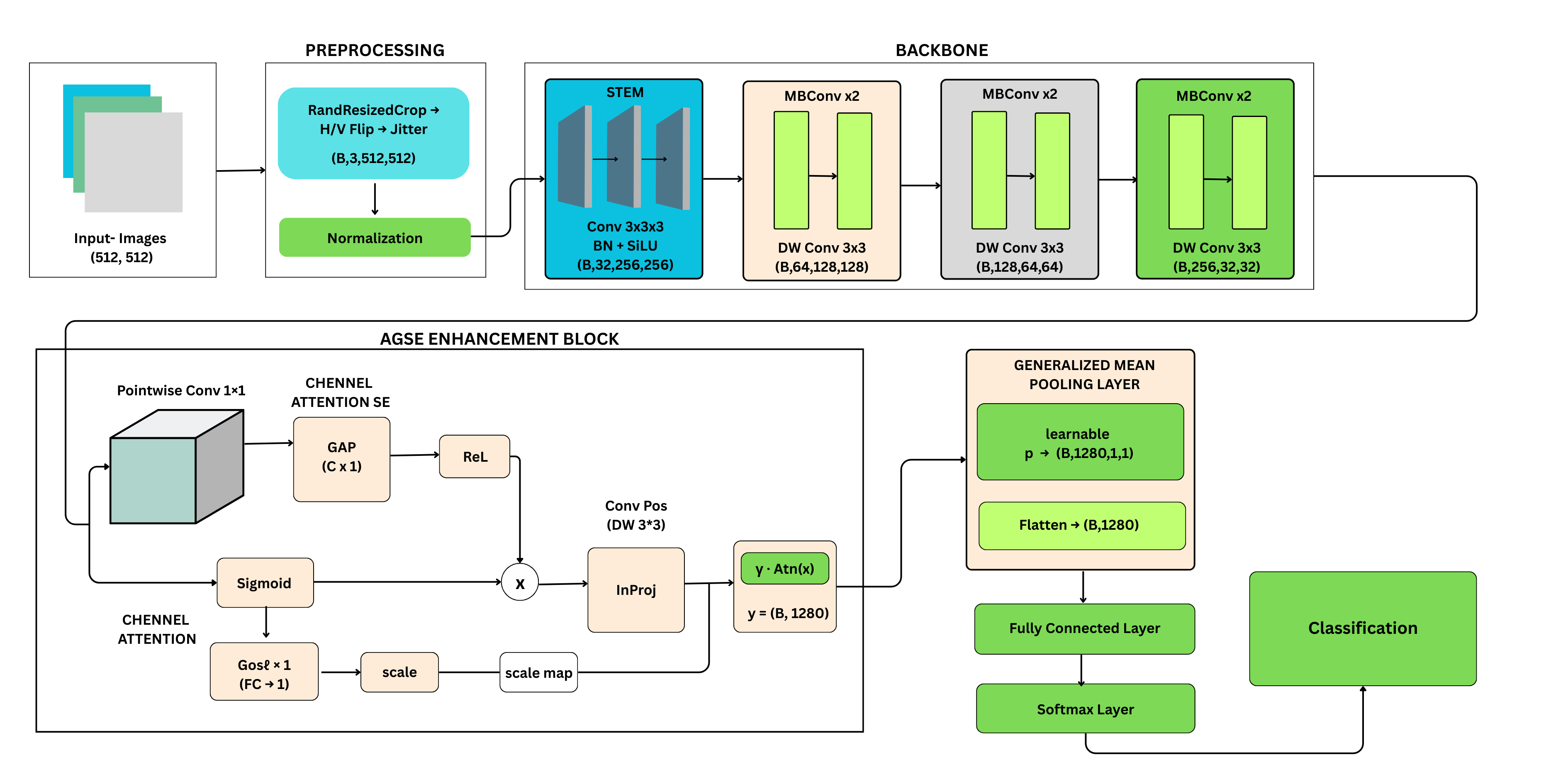
Two multi-class datasets were created in both natural field and laboratory settings, comprising five severity levels for powdery mildew and six severity levels for aphid infestation. A lightweight attention-based deep neural network was developed, integrating an efficient inverted residual backbone with Attention-Guided Squeeze-and-Excitation (AGSE) modules, multi-head self-attention mechanisms, and generalized mean pooling to improve feature discrimination in complex environmental conditions. The robustness of the model was assessed utilizing five independently trained models on a predetermined test set. Performance metrics encompassed accuracy and area under the curve (AUC). Ablation studies were performed to evaluate the impact of attention modules and channel recalibration processes. To improve interpretability, Grad-CAM++ visualization was utilized to emphasize regions affected by illness and pests without necessitating specific object recognition.
